From the Bay to the Sound
A Neighborhood Guide for Moving from San Francisco to Seattle
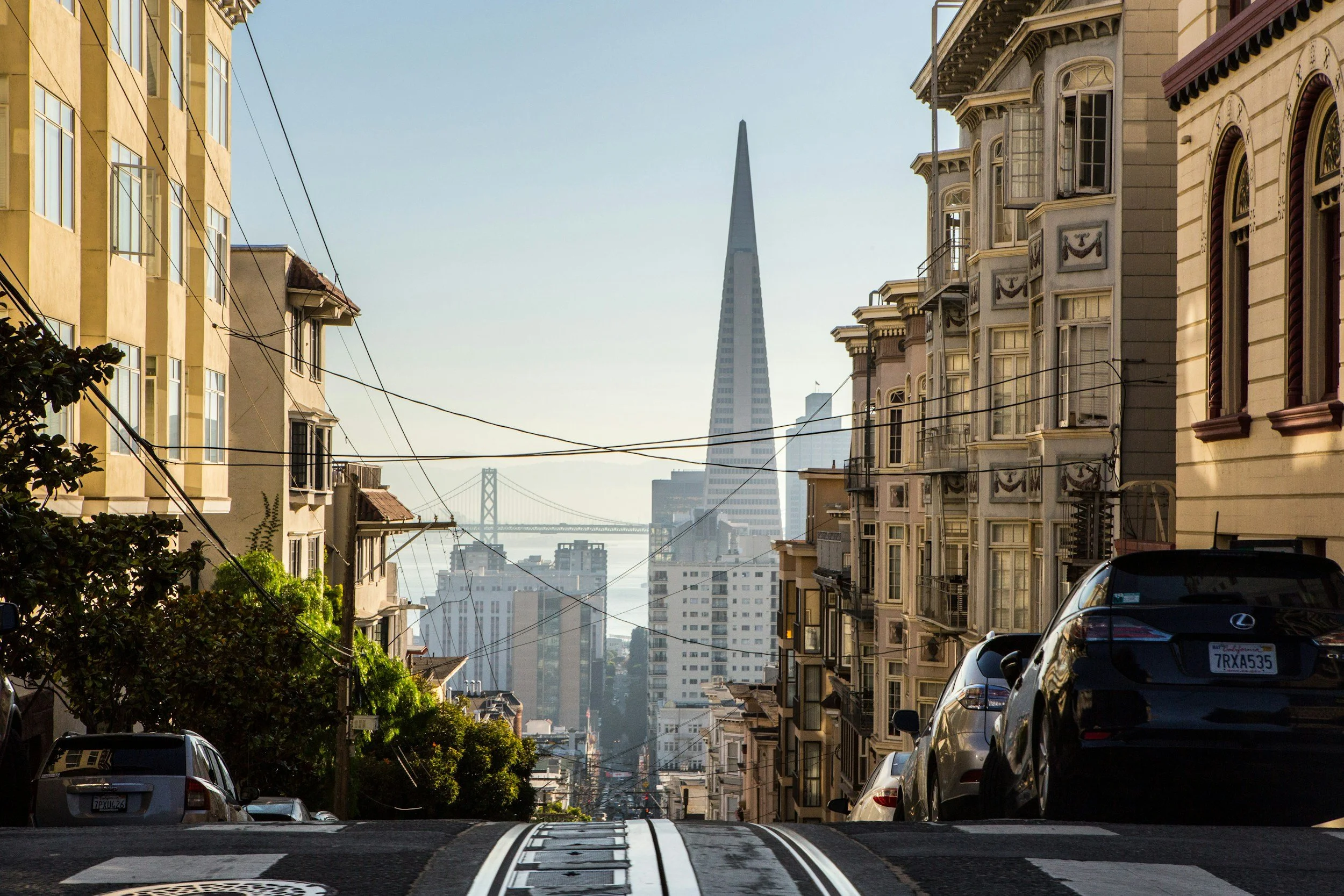
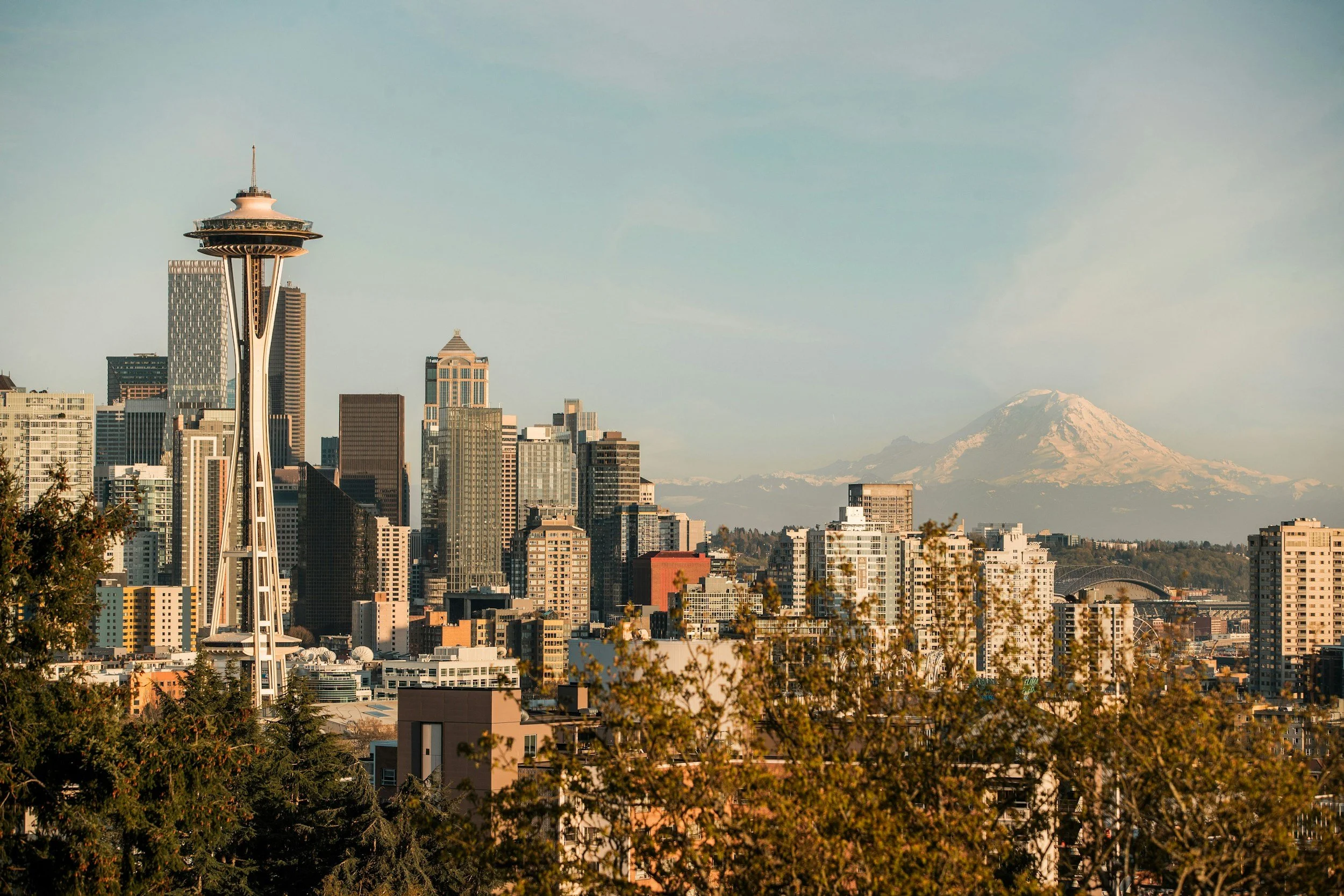
San Francisco and Seattle know they are siblings. Same hills. A price tag that echoes impossibility. Same progressive politics, same tech money, same insistence that their particular brand of sourdough is the correct one. If you've lived in both — and I have, more times than I can count, back and forth across my whole adult life — you know the uncanny feeling of landing in one city and briefly thinking you're in the other.
But they are not the same city. Not even close.
San Francisco is Full House — the Painted Ladies, the crooked turns of Lombard Street, a city so photographed you feel like you've lived there before you ever do. Seattle is Frasier. Someone came here from somewhere else, built a life, found their people, and stayed. And yes, we have Pike Place Market and the Space Needle — but just like you, we are so much more than our postcards.
The architecture says it too. In San Francisco, the dream house is a Painted Lady — theatrical, colorful, a whole Victorian row of look-at-me. In Seattle, it's a Craftsman — handmade, warm, quietly proud, built to last. Two veins of the same thing. Two different philosophies about what home is supposed to say.
And the light. God, the light. San Francisco gives you brightness, clarity, that particular golden-hour glow that makes every hill look like a movie set. Seattle gives you clouds — and I mean that as a compliment. Clouds here are a meditation. There are mornings here where the sky isn't grey so much as pearl, or slate, or the particular silver that comes just before everything breaks open. I've started to think we need more words for it, the way the Inuit are said to have words for snow — not just the kinds of clouds, but the way they layer, the way they move, the way they make the water look.
I love San Francisco the way you love a place that got into your blood before you had any say in the matter. It is a lover I long for, but might not belong with.
Seattle is where I live. And I've come to understand that's a different thing entirely — and maybe a better one.
I've spent my career helping people find neighborhoods that fit the way they actually live, not just the way the listing photos look. So when Bay Area buyers ask me what Seattle will feel like — I translate. That's what this is.
One more thing before we start: a brief pronunciation gift, because nothing says "just moved here" like mispronouncing your own address.
Vashon — VAH-shon (the "a" like "cat” almost rhymes with passion)
Puyallup — pyoo-AL-up (rhymes with nothing you've ever said before)
Tukwila — tuk-WIL-ah
Issaquah — ISS-uh-kwah
Sequim — SKWIM (bonus round; you're welcome)
Olympia — locals just say Oly. You should too.
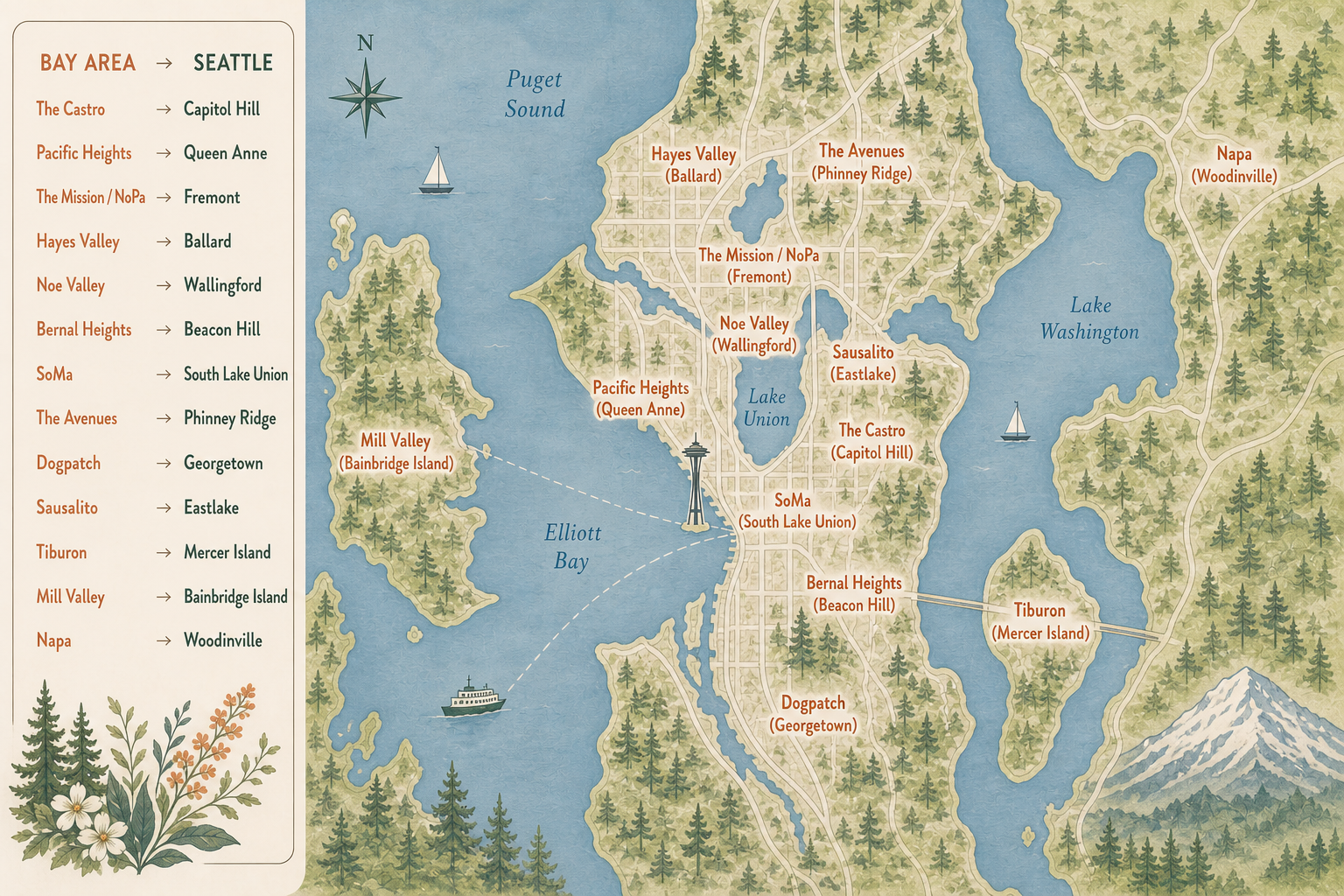
Map created with AI illustration tools. A collaboration with a Seattle cartographer is in the works — stay tuned for something even better.
The Neighborhoods You Already Know You'll Love
If you loved living in ___, here's where you belong:
The Castro → Capitol Hill (Cap Hill) Seattle's LGBTQ+ cultural and nightlife hub, with Pike/Pine as its spine. Community, identity, drag, protest, murals, brunch. The closest direct analog in the Pacific Northwest, and the one transplants tend to find first.
Pacific Heights → Queen Anne Hilltop views, Craftsman and colonial architecture, a retail corridor that feels curated without trying too hard — think Fillmore Street meeting Queen Anne Ave N. Both neighborhoods have the particular energy of a place that has always been nice and knows it. Old-growth trees. Good bones. Neighbors who wave.
The Mission / NoPa → Fremont The Mission and NoPa have a specific cocktail going: artsy roots, tech-gentrified present, great food, a countercultural hangover that refuses to fully clear. Fremont has that same energy — it used to be weirder, it's making peace with what it's becoming, and it hasn't totally lost itself yet.
Hayes Valley → Ballard Design-forward. Boutique dining that actually delivers. Young creative professionals who own nice things and care where their coffee comes from. Both neighborhoods have "arrived" — they feel curated without being sterile. Ballard gives you the water, too, which Hayes Valley cannot.
Noe Valley → Wallingford Stroller energy. Relatively sunny. Walkable and village-scaled, with the kind of neighborhood pride that tips occasionally into smugness. Young families who found their place and are staying. This is a high-compliment comparison.
Bernal Heights → Beacon Hill Hilltop, diverse, artsy, comparatively affordable, excellent views, strong progressive community identity, extremely dog-friendly. Bernal people find Beacon Hill and feel immediately at home. The CD (Central District) is worth a look for the same reasons.
SoMa → South Lake Union (SLU) New construction. Tech campuses. Transit-oriented everything. Floor-to-ceiling loft windows. The "I moved here for the job" neighborhood in both cities — and there's nothing wrong with that. SLU is walkable, convenient, and still growing into its personality. Give it time.
The Avenues (Richmond / Sunset) → Greenwood / Phinney Ridge The Avenues are the quiet backbone of San Francisco — residential, foggy, full of good dim sum and families who've been there for decades and have no intention of leaving. Greenwood and Phinney Ridge have that same unhurried energy: neighborhood restaurants, independent shops, people who like their lives to have a local scale.
Dogpatch → Georgetown Dogpatch is former industrial waterfront turned design studios, breweries, and people who got priced out of the Mission. Georgetown is Seattle's version: still has some edge, creative industry, murals, repurposed light industrial buildings. Both neighborhoods reward people who like their cities a little unpolished.
Sausalito → Eastlake / Edmonds Waterfront-adjacent, artsy, a little precious in the best way, small-town feeling within reach of the city. If you want to stay close to Seattle, try Eastlake. If you want the full Sausalito experience — boutique, quiet, somewhere you can actually hear yourself think — consider Edmonds. It will surprise you.
Tiburon → Mercer Island Affluent, polished, connected to the city by bridge, great schools, residents who want "near Seattle" without the noise. (The Marina Green crowd who decided to grow up. You know who you are.)
Mill Valley → Bainbridge Island A ferry commute that becomes a daily ritual rather than a burden. Small-town identity that residents protect fiercely. Outdoorsy, beautiful, and just far enough away to feel like an escape. Bainbridge people are Bainbridge people the same way Mill Valley people are Mill Valley people. It's a whole thing.
Napa → Woodinville Wine country identity. Tasting rooms. Estate properties. Still commutable if you need it to be. The agriculture is there, the investment is there, and the lifestyle translates almost directly — you're just trading the California sun for a sky with more to say.
Before You Go
Every neighborhood has a psychology. The people who thrive in the Mission have a different relationship to home than the people who thrive in Pacific Heights — and that holds whether you're in San Francisco or Seattle. The best move isn't about price per square foot. It's about finding the place that fits the way you actually live — the way you want Tuesday morning to feel.
I work the full corridor from Tacoma to Edmonds, and I know these neighborhoods the way I know both cities: off the highlight reel, past the listing photos, in the rain and the traffic and the Tuesday-in-February version of things. If you're a Bay Area relocator who wants someone who speaks both languages, I'd love to be your translator.
And this is only half the list. Next up: the neighborhoods the locals actually live in — the ones that don't show up in the magazine spreads but do show up in the spreadsheet, and then in your heart. That post is coming soon.
If you're already running the math on the move, email me at xan.roberti@exprealty.com and I’ll send you a Bay-Area-to-Seattle starter kit — the neighborhoods I'd start with based on what you love about home now, plus what to know before you list your place down there. No sales pitch. No homework. Just a guide.