The Building Gets a Vote: Condo vs. Co-op in Seattle
Condos and co-ops look identical from the sidewalk. Only one of them lets the neighbors decide about you.
I lost a deal over this once.
We had done everything. Toured it twice. Ran the numbers, ran them again. Built the strategy, set the dates, lined up the money. The contract was finished. We were maybe an hour from sending an offer on a place my buyer loved.
She was paying cash. Money was not the obstacle. And she said: Xan, I just — if we want to sell in three to five years, will it appreciate? Is it a good investment? And how do we know there isn't something hidden in there that needs to be repaired?
Three questions. All fair. And on the first one, the honest answer was probably no.
Not because anything was wrong with the building. Because three to five years is the wrong holding period for a co-op, and nobody had said that to her out loud.
She walked. I think she was right to.
But I've spent a lot of time since then bothered by how little people know about these awesome homes. There aren't many in Seattle, and the ones that exist hint at the kind of community I'm always after.
So here are the answers to her three questions.
First, the part nobody argues about
Walk around Capitol Hill. Or First Hill, or lower Queen Anne, or the older pockets of the Central District.
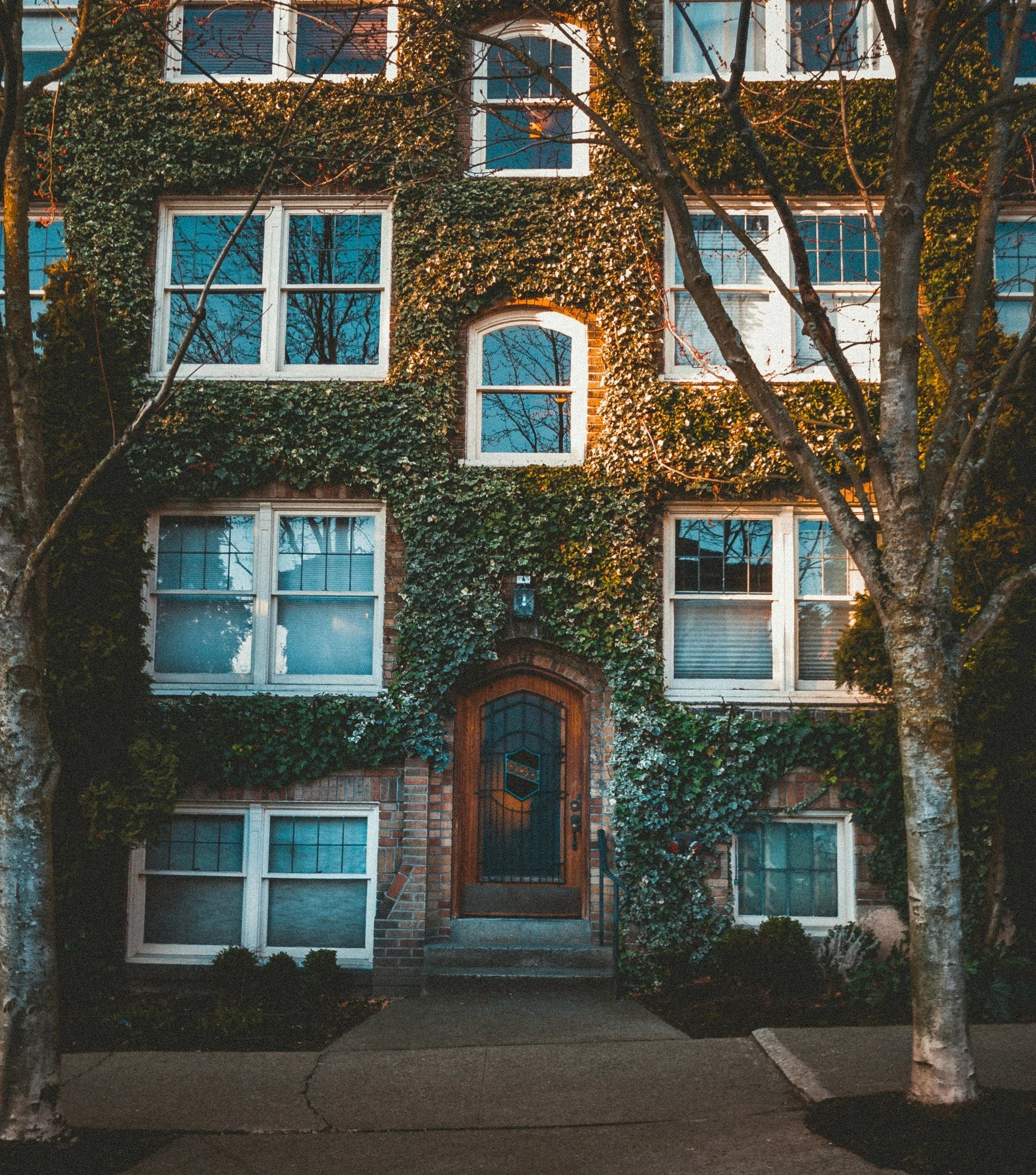
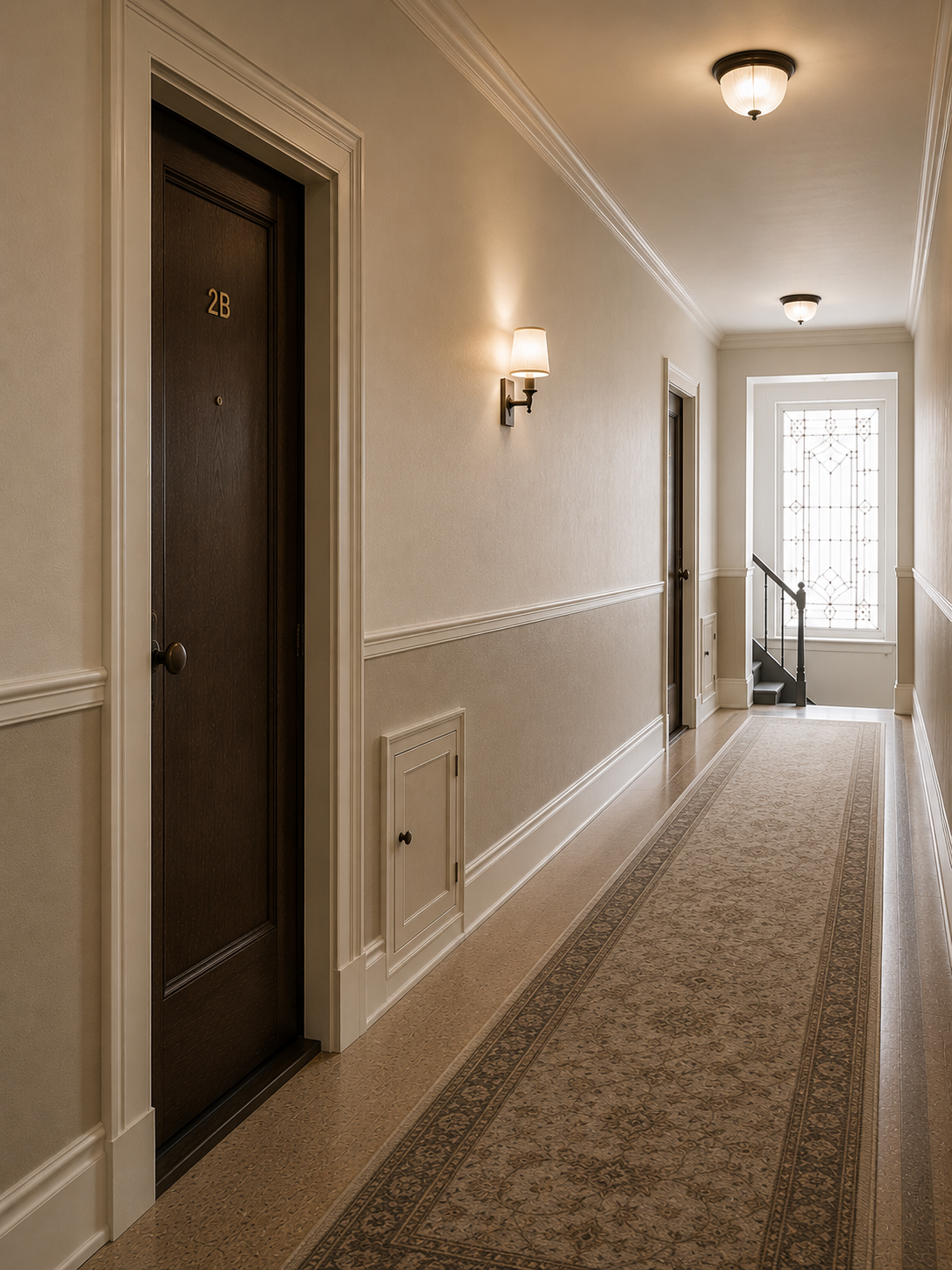
You'll pass them. Old brick, three or four stories. Wisteria or ivy grown up one whole wall. A little courtyard in the middle with a fountain that may or may not have worked since the Ford administration. Inside: 1920s one- and two-bedrooms, hardwood floors, coved ceilings, a built-in you'd never get in new construction. Sometimes stained glass in a stairwell landing, for no reason except that someone in 1926 thought a stairwell deserved it. And low on the wall beside a unit's front door, sometimes a little hinged door the size of a shoebox — a milk door, with a matching door on the inside, so the milkman could leave the bottles in the hallway and you could take them in from your kitchen without getting dressed.
There's a feel to those buildings. A breath. A sense that you belong to a different time, or that you belong to the place in a different way. It reaches backwards.
It feels great. It's why people fall in love with those buildings before they know a single thing about them.
And you walk past and you think condo, condo, condo.
A lot of the time, they're not. They're co-ops. And the thing that makes them cheaper than the glass tower down the hill is the same thing that makes people nervous about them.
What you actually own in a condo
You get a deed. Recorded, in your name, with title insurance behind it.
What that deed describes is a defined space inside the building — generally the airspace and finished surfaces of your unit — plus an undivided share of everything else. Roof, elevator, boiler, hallway, the fountain.
You own real property. You get a normal mortgage. You sell to whoever brings the money.
The association can tell you what color your door is. It cannot tell you who to sell to.
What you actually own in a co-op
A housing cooperative is a corporation. The corporation owns the building — all of it, your unit included.
You don't buy a unit. You buy shares in the corporation, and those shares come with a proprietary lease: a written agreement giving you the exclusive right to occupy one specific home.
So you're a shareholder and a lessee. Not, technically, a property owner.
Washington law is oddly clear about this. Under the state's common interest ownership statute, a proprietary lease is a recordable lease where the association is the landlord and the member gets exclusive possession. And here's the tell: that lease is specifically carved out of Washington's Residential Landlord-Tenant Act.
You have a lease. You are not a tenant. You have an owner's stake. You do not have a deed.
Co-ops live in the gap between those sentences. It's a strange place to keep your money, and anyone who notices that is paying attention. But strange and unsafe aren't the same thing, and the difference is most of what follows.
The board gets a vote
You can be turned down.
Co-op boards interview prospective buyers. Tax returns, bank statements, employment verification, sometimes references. Then they vote.
Not on your offer. On you.
If you've watched Only Murders in the Building, you already know more about this than you think. The Arconia is a co-op — the residents are shareholders, the board calls meetings, and a good chunk of the show's comedy is just people who own a building together being insufferable at each other in a lobby. (Fun wrinkle: the real building, the Belnord on the Upper West Side, went condo in 2018. The fictional version kept the co-op, because a condo board can't generate that much drama.)
Or the Dakota, on Central Park West — the exterior in Rosemary's Baby, and a real co-op with a real board that has reportedly turned away Cher and Billy Joel, among others. Buildings like that are why co-op boards have the reputation they have.
In Seattle it's less theatrical and more like a coffee meeting with a spreadsheet. But the power is the same. Fair housing law applies — a board cannot reject you based on race, religion, family status, disability, national origin, or any other protected class. Boards also generally aren't required to explain a denial, and "the finances didn't work for us" is always available. The protection is real. The gap under it is also real, and it has a long, unlovely history in American housing.
Practically: build extra time into your timeline, and don't give notice on your rental until the board has voted.
Now the strange part: co-ops are both the cheapest and the hardest way in
This is the thing that confuses everyone, including agents, so here it is plainly.
The same legal structure produces opposite outcomes depending on the building.
The old ones can be nearly cash-only. Your shares aren't real property, so you don't get a mortgage — you get a share loan, and far fewer banks make them. Expect a short lender list, a larger down payment, and less competitive terms. Government-backed financing is rarely a practical option.
Here's the part that catches people flat: you usually don't get to pick your lender.
You spend weeks getting pre-approved. You walk in holding it. And the building says not that one — ours. Most co-ops have one or two approved share-loan lenders who have signed a recognition agreement with the corporation, which is the contract sorting out who gets paid first if a shareholder falls behind. No agreement, no loan. So you ask the building who lends there, and that's who you use.
Some older buildings, especially small ones with aging systems, end up effectively cash-buyer territory. Which is how a $389,000 co-op can be harder to buy than a $525,000 condo.
And every wall you climbed on the way in, your future buyer climbs on the way out. Fewer lenders, plus a board that can say no, means a smaller pool of people able to buy it from you. Less demand, slower appreciation. You buy at a discount and you sell at one.
This is the part that got my buyer, and it's worth sitting with, because she was paying cash. None of the financing trouble touched her. It didn't matter. Her cash protected her going in and did nothing for her coming out, because whoever bought it from her in three years would need a share loan from a lender the building had to bless first.
So: a co-op is not the same investment as a condo, and the price already knows it. The discount isn't a deal you found. It's the risk, priced. Which also means the honest answer depends almost entirely on how long you're staying. Over three to five years, a co-op is a hard place to make money. Over fifteen, it's just the cheaper way you got in.
The new ones can be the cheapest ownership in the city. Because a co-op corporation can carry a blanket mortgage on the whole building and let each resident carry a small share loan, you get two layers of debt — which means the individual buy-in can be tiny.
That's the entire premise of Frolic Community, a Seattle outfit that came out of research at MIT and started here in 2019. They partner with a landowner, build six to ten homes on an upzoned single-family lot, and structure it as a co-op specifically to get co-op financing. Their reported down payments run in the five figures — tens of thousands, not the roughly $140,000 that's typical for a Seattle purchase — with monthly costs at or near market rent. Their Corvidae Co-op, ten homes on a forested hillside near Columbia City, opened in 2024 for households in the 50–120% AMI range, layered with down payment assistance from the Seattle Office of Housing, HomeSight, and Habitat. A second project, Cedrus Collective, is landing in the Central District. (Confirm current numbers with Frolic before relying on them — this model moves fast.)
Same structure. One version screens out everyone without cash. The other is one of the only paths into ownership for a teacher in this city.
Renting it out: read this before you fantasize
Most co-ops limit or prohibit subleasing outright. The whole model runs on owner-occupancy — that's the point of the board.
Condos are looser but not loose. Many have rental caps in the CC&Rs, and plenty ban short-term rentals entirely. There's a second-order effect people miss: when a building's investor-owned share climbs too high, it can stop being warrantable — meaning it no longer meets the standards Fannie Mae and Freddie Mac set, so a regular lender won't write a regular loan on a unit there. Buyers get pushed to specialty lenders with bigger down payments and higher rates. Fewer people can buy, and values soften for everyone. It's worth asking your lender to check a building's warrantability before you tour it twice and fall in love.
The rules that annoy you as an investor are the same rules protecting your resale as an owner. Pick your seat.
Before you write an offer on either one
Ask for the governing documents and actually read them. In Washington, condos and co-ops are both "common interest communities," and newer ones fall under the state's 2018 uniform act — but most older Seattle co-ops predate it by decades and run on their own bylaws plus the cooperative corporation statute. Two co-ops in the same zip code can work completely differently.
Get the budget, the reserve study, a year or two of minutes, the rental policy in writing, the pet policy in writing, and for a co-op: the underlying blanket mortgage terms and the sublease rules.
Minutes are where the bodies are. Special assessments, roof arguments, that one lawsuit. Read them.
Get two inspections, not one
This is the answer to my buyer's third question — how do we know there isn't something hidden that needs to be repaired — and it's the part I push hardest with anyone buying into a shared building.
Yes, get a home inspection. Your inspector will look at your unit — outlets, plumbing, windows, the water heater.
Your inspector will not tell you that the roof has eleven years left and $40,000 behind it in reserves. Or that the minutes show the board circling the same siding conversation since 2019. Or that the resale certificate has a special assessment sitting in it that nobody mentioned out loud.
That's a different specialty, and it exists. In Washington, CIC Consulting Group does resale certificate and governing document review for condo buyers — reading the association the way an inspector reads a house.
You are buying a share of a building's finances. Have someone read them who does that for a living.
And while I'm here: I'm a broker. I'm not an accountant and I'm not an attorney. There are questions buried in a resale certificate that belong to both — tax treatment, lien priority, what a special assessment does to your basis. The good news is that a specialist exists for every piece of this. Using them isn't paranoid. It's how the people who don't get surprised do it.
The thing underneath all of this
Every building decides who gets to live in it. Condos do it with money and a credit report. Co-ops do it with a meeting.
We're comfortable with the first one because it's silent, and uncomfortable with the second because someone has to look at you while it happens. But it's the same question either way, and the co-op is at least honest enough to say it out loud: does this person belong here?
Which is, if you back up far enough, the question underneath every housing decision anyone has ever made. (Ask me about a newsletter I write addressing just this question!) We just don't usually make people sit in a room and answer it.
She made the right call, I think. Three to five years, cash, wanting the number to go up — that's asking a co-op to be something it isn't.
But she isn't who I think about when I pass those brick buildings with the ivy and the courtyard and the light coming through the stairwell glass.
I think about the next one. The buyer who gets these answers before they walk in the front door. The buyer who hears all of it — the board, the share loan, the slow appreciation, the neighbors who have to vote her in — and says yes anyway. Not because nobody warned her. Because she wants the courtyard. Because she wants to know who lives on her floor.
That's the whole strange, specific life these buildings were built for. Somebody should get to choose it on purpose.
Curious about a co-op, a condo, or one of the new co-ownership models? I show these buildings, I read the minutes, and I keep a short list of lenders who actually handle this kind of financing — including the co-op share loans most banks won't touch. I'll tell you when the structure is a real problem and when it's just unfamiliar. Let's talk.