Is It Still the Right House?
A Downsizing Guide for Empty Nesters
Right now, somewhere in your house, there is a kid who is almost gone.
Maybe they're a senior, and you're counting down in caps and gowns. Maybe they're younger and you're counting down in summers. Either way, you've done the math you pretend you haven't done: how many more pancake mornings, how many more championship games or recitals, how many more slammed doors, how many more fits of snorting, can't-breathe laughter, how many more times you'll trip over the shoes in the hall.
Here’s the truth that's hard to say out loud at the dinner table: you raised them to leave. That was always the point. And now it's working.
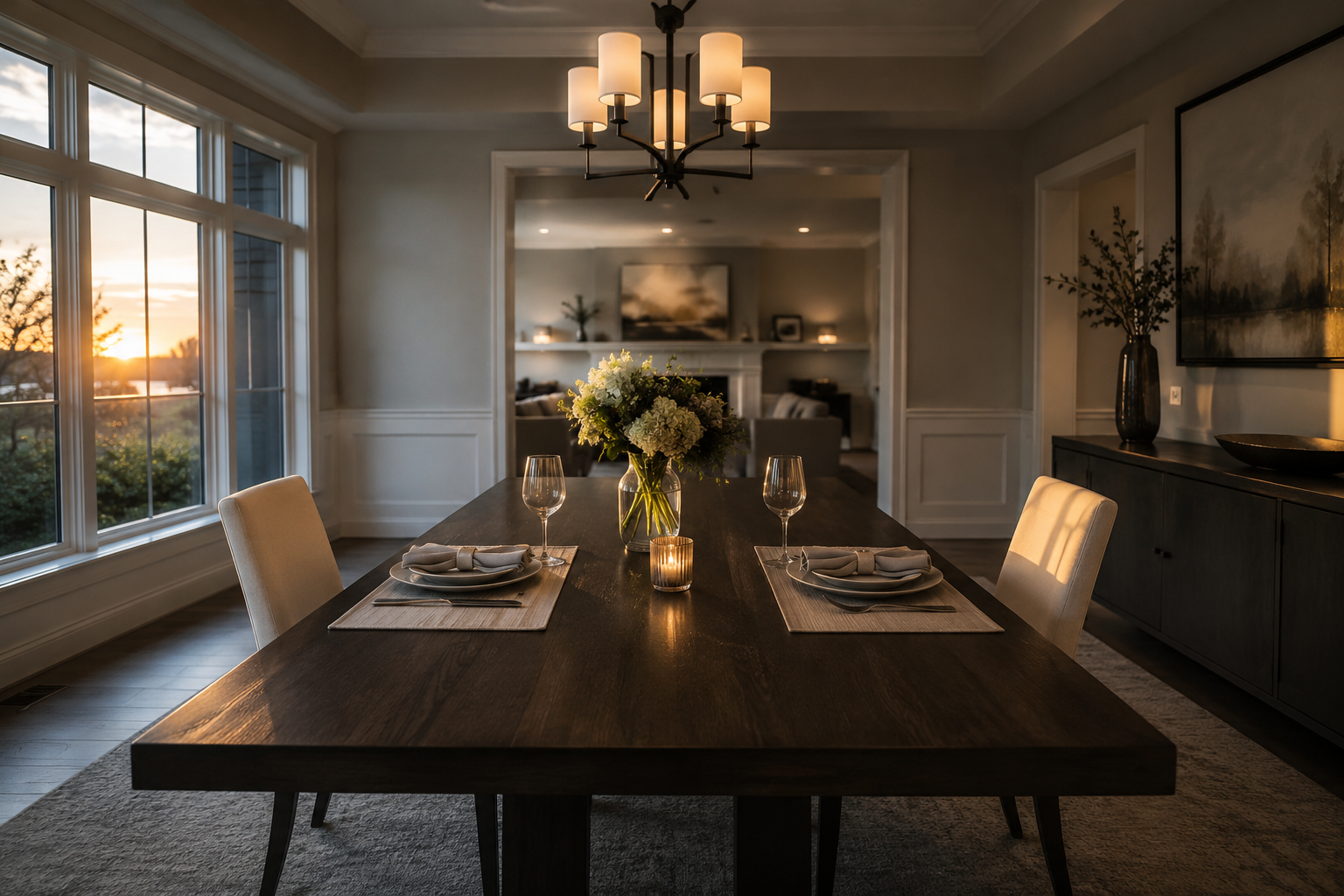
Maybe that day is coming this fall. Maybe it came a couple of years ago, and you've been rattling around the quiet ever since. Either way, at some point you start to notice the house — the bedroom gone quiet, the table built for six that's down to two, the rooms and the yard and the square footage you're still heating and cleaning and paying taxes on, all of it built for a full house that's emptied out exactly the way it was meant to.
Which is when a lot of people start, quietly, to wonder: is this still the right house?
It's a fair question. So let's take it seriously, without rushing you.
For a while, the quiet is nice. Then you start to notice the rooms — the bedroom nobody sleeps in, the table built for six that now seats two, the yard you're still mowing for a game of catch that ended years ago. You're heating, cleaning, insuring, and paying property tax on square footage that's mostly memory now.
This is the moment a lot of people start, quietly, to wonder: is this still the right house?
It's a fair question. It's also a heavy one. So let's take it seriously, without rushing you.
Saying it's "too much house" doesn't mean you didn't love it
Here's the thing nobody warns you about: deciding to sell a home you raised people in is not a real estate decision. It's a grief decision wearing a real estate decision's clothes.
That house is where the heights got penciled on the door frame. It's where the dog had puppies in the yard. It's the kitchen where most of the important things got said. Leaving it can feel like leaving them — the younger versions of your kids, and the younger version of you.
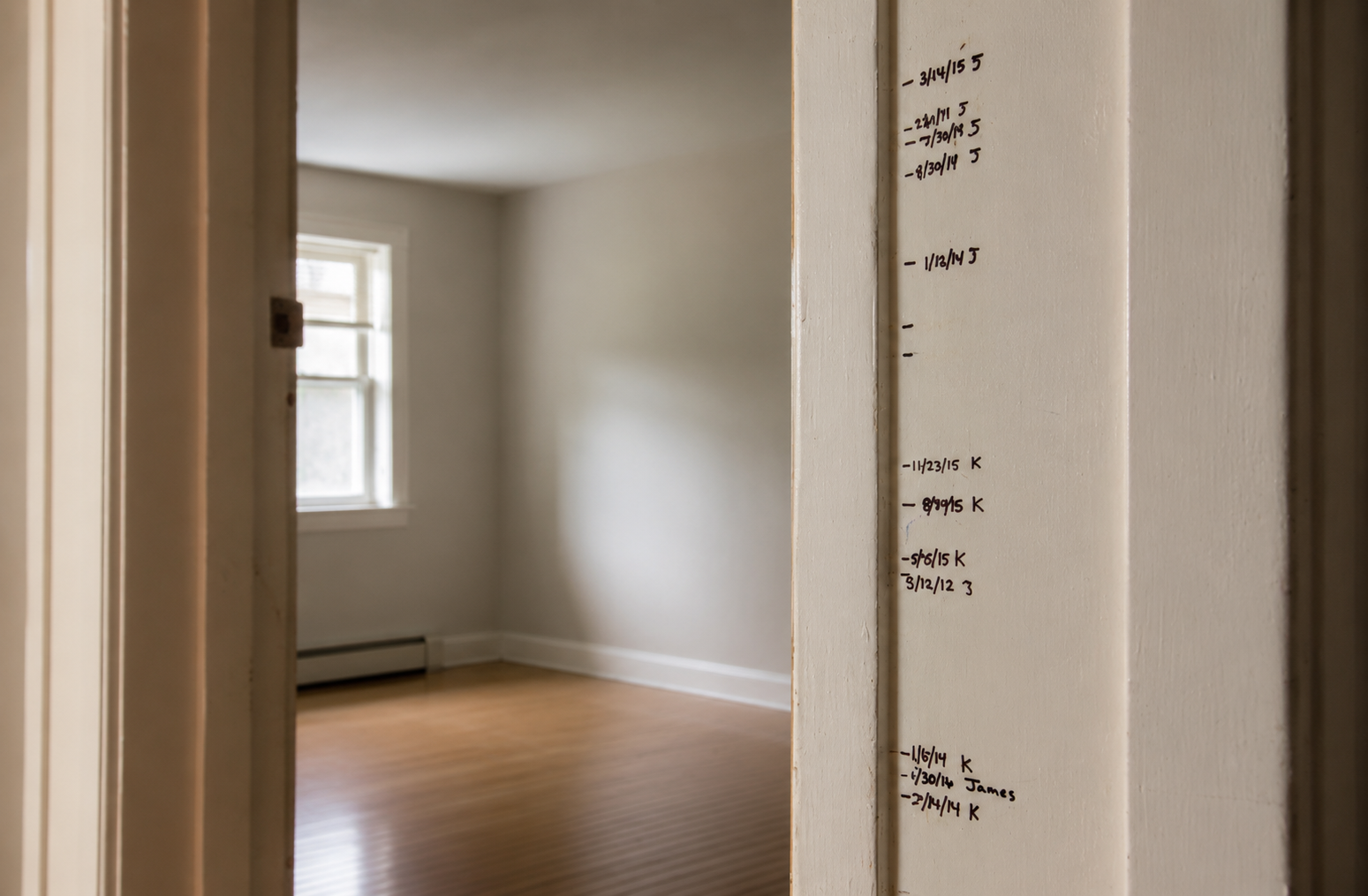
So if part of you resists, that part isn't wrong. You're allowed to grieve a house. Honestly, I'd be a little suspicious of anyone who could sell the family home without a lump in their throat. The grief isn't a sign you shouldn't move. It's a sign the house did its job.
When the time does come, mark it. Walk the rooms. Take the picture of the door frame before anyone paints over the pencil marks. Let it be a goodbye and not just a transaction. The people who give themselves that tend to land softer on the other side.
The real reasons people don't move (even when they want to)
If downsizing were only about square footage, everyone in a too-big house would already be in a smaller one. They're not — and it's usually for one of these reasons:
"I have a great mortgage." This is the big one right now. If you locked in a low rate years ago, trading it for today's rate — still in the 6s — can feel like setting money on fire. That's a real cost, not a small one. But run the actual numbers before you let it make the decision for you. A smaller home, lower taxes, less upkeep, and the equity you've built can shift the math more than the interest rate alone suggests.
"Where would we even go?" Fair. Downsizing only works if there's somewhere good to land. That's worth solving before you list, not after — and it's very solvable.
"What about all the… stuff?" Ten, twenty, thirty years of stuff is genuinely daunting. But the sorting tends to be less about boxes and more about deciding what the next chapter actually needs. (Which, it turns out, is usually less than you'd think.)
"It feels like giving up." It isn't. More on that in a second.
The part where it's actually two moves at once
Most downsizers aren't just selling. They're selling and buying — which is really two transactions doing a careful dance with each other.
The encouraging version: in a market like ours, you've got real things working in your favor. Even with more homes on the market than there were a couple of years ago, well-kept and well-priced homes still sell quickly around here. And the equity in a long-held family home is often substantial — frequently enough to buy the next place with breathing room, sometimes outright.
The thing to get right is sequencing. Do you sell first and risk scrambling to buy? Buy first and risk carrying two payments for a stretch? There are tools for both — bridge financing, sale contingencies, and rent-backs that let you stay put a while after closing. None of it is one-size-fits-all, which is exactly why it's worth talking through early, with someone who'll map it to your real situation instead of handing you a generic timeline.
Downsizing isn't shrinking

Here's the reframe I'd offer, after all of it.
A smaller house isn't a smaller life. It's a decision about what you want the house to be for now. For years it was for them — for sleepovers and homework and the chaos of a full table. That was right. It just isn't the only thing a home is allowed to be.
The next house gets to be for you. For the trip you take instead of the roof you replace. For the hobby that finally gets the room the kids' boxes used to fill. For the dynamite location, or the view you can now choose. For mornings that are quiet because you chose the quiet — not because everyone left.
That's not giving up. That's deciding, on purpose, what a home is for. Which is about the most grown-up thing a person can do with a house.
So — how long until they leave?
However long it is, you have time to think it through. And when you're ready to do the math — the real math, not the scary back-of-the-napkin kind — that's what I'm here for.
Thinking about whether your house still fits the life inside it? I help people sell the home that raised them and find the one that fits what comes next — the whole sell-and-buy dance, mapped to your actual situation. And if your house is bursting rather than emptying — a growing family, not a shrinking one — that's the same conversation in reverse. I do that too.) Reach out anytime. No countdown required.