The Hidden Value in Your Backyard
How an ancient human instinct explains why your property may be worth more than you think
For most of human history, we didn’t live alone. We lived in clusters—extended families sharing courtyards, multi-generational compounds, separate structures around a common space. From ancient Rome to rural Japan to the cliff villages of Mesa Verde in Colorado, the pattern was remarkably consistent: small dwellings, close together, occupied by people who knew each other.
Then, in the mid-twentieth century, America tried something radically different. One family, one house, one lot. We called it the single-family zone, and we built an entire country around it.
That experiment is ending—not because of politics, but because it stopped matching the way people actually want to live.
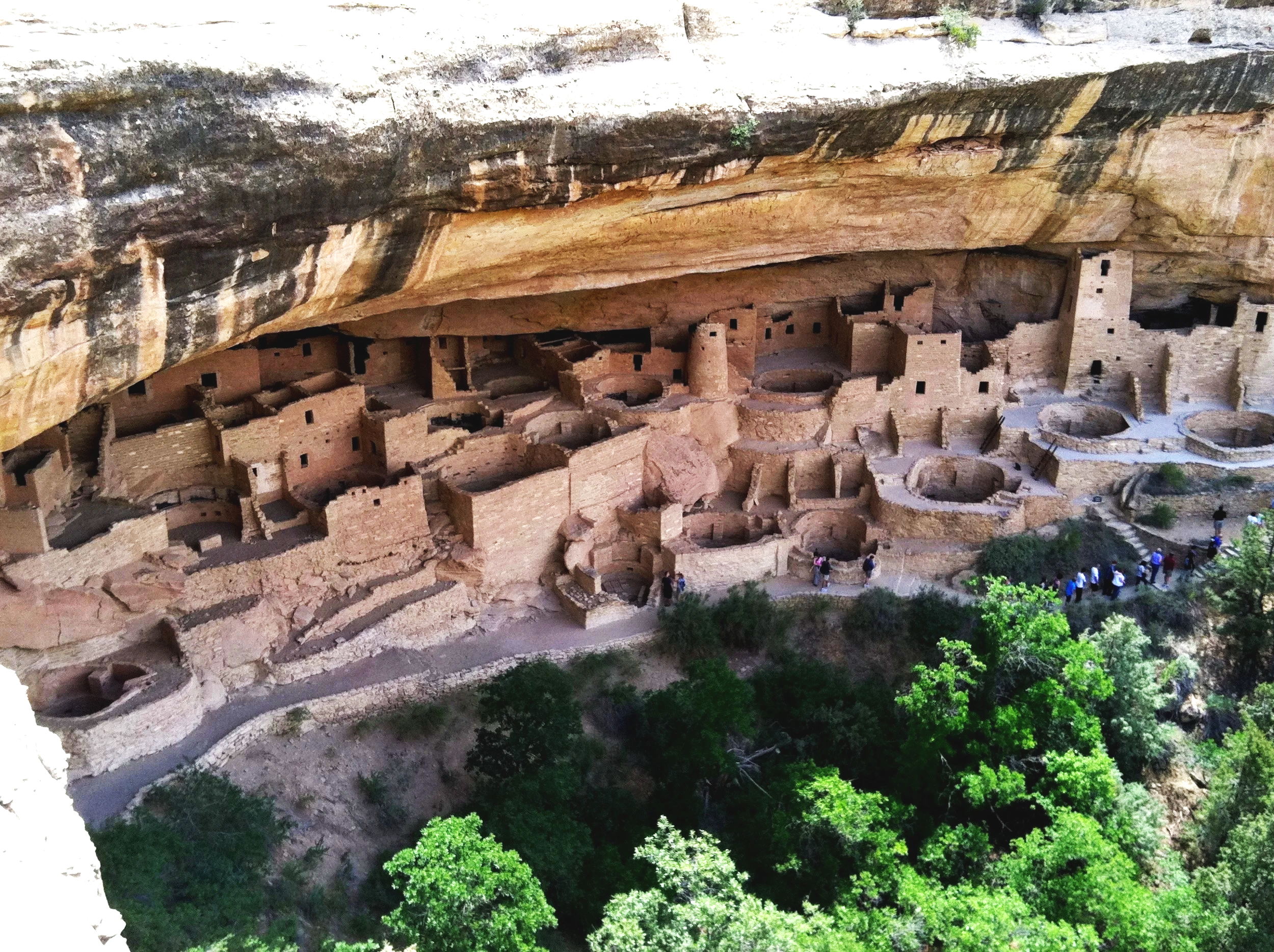
Cliff Palace at Mesa Verde, Colorado. Over 150 rooms, 23 kivas, and home to roughly 100 people — small dwellings, close together, occupied by people who knew each other. Sound familiar?
The Pull of the City
Forty-five percent of the world’s population now lives in cities—more than double the share in 1950, according to the UN World Urbanization Prospects 2025. In North America, over 80% of us live in urban areas. We are, overwhelmingly, a species that has chosen to cluster together.
But the way we cluster is shifting. Millennials—the largest generation in American history—spent their twenties in urban cores and are now in their thirties and forties, starting families and wanting something that feels like a contradiction: suburban space with urban access. Meanwhile, Gen X is quietly facing a different version of the same squeeze—aging parents who need to be closer, adult kids who can’t yet afford to launch, and a home that needs to work harder for everyone. (I say this as a Xennial myself, straddling that bridge between the two generations and feeling the pull from both directions.) The old binary of city apartment or suburban house doesn’t have to be the only choice anymore.
Cities that are figuring out how to add homes gently—within existing neighborhoods, without high-rises or sprawl—are the ones solving the puzzle. And if you own property in one of those cities, you’re sitting on something more valuable than you may realize.
Seattle’s Particular Pressure
Seattle sits at a fascinating pressure point. The median household income is around $122,000—nearly 60% above the national median of $77,700. For married couples with children, Seattle is one of just three cities where the median tops $250,000. People want to be here. They can earn here. But the housing wasn’t shaped for how they actually need to live—aging parents who want to stay close, adult children saving for a first home, families who need rental income to make the mortgage work.
So the rules changed. Today, most residential lots in Seattle can support up to four housing units. Owner-occupancy requirements are gone. You can subdivide a lot with a detached unit and sell it separately. This is the most significant shift in how residential land works in Seattle in decades. And most homeowners I talk to have no idea it happened.
And It’s Not Just Seattle
Washington State has been reshaping housing policy from the top down. State legislation now requires cities to allow at least two ADUs per lot, with streamlined permitting and no owner-occupancy mandates. And these changes aren’t limited to Seattle proper. Cities like Kent, Burien, Renton, Normandy Park, and Tacoma are all updating their codes to comply. If you own property anywhere between Seattle and Tacoma, the rules around what your lot can do have likely changed—and that changes what it’s worth.
There’s also a bill moving through the legislature right now (HB 1345) that would extend ADU options even further across the state. The direction is clear: Washington is rethinking what a residential lot can be, from urban neighborhoods to suburban corridors and beyond.
The Territorial Instinct (And Why It’s Not the Enemy)
If reading all of this makes you feel a flicker of resistance—that’s completely natural. Humans are territorial. It’s one of our oldest instincts. We form deep attachments to the view from our kitchen window, the quality of quiet on our street, the sense that we know what our neighborhood is. When someone suggests change, something primal pushes back. That’s not a political position. That’s neuroscience.
But here’s what I’ve seen working with homeowners and investors across the Seattle area: once people understand what this shift means for their property, the resistance dissolves into curiosity. What if that backyard cottage means your mother lives thirty steps from your door instead of thirty minutes away? What if your adult child can save for a down payment while paying you rent instead of a stranger? What if the buyer looking at your property sees not just a house, but an income-producing asset—and pays accordingly?
That’s not a threat to belonging. That is belonging.
So What Do You Actually Look For?
Whether you already own a home and you’re wondering if your lot has potential, or you’re a buyer searching for a property that could work harder for you—these are the kinds of questions worth asking:
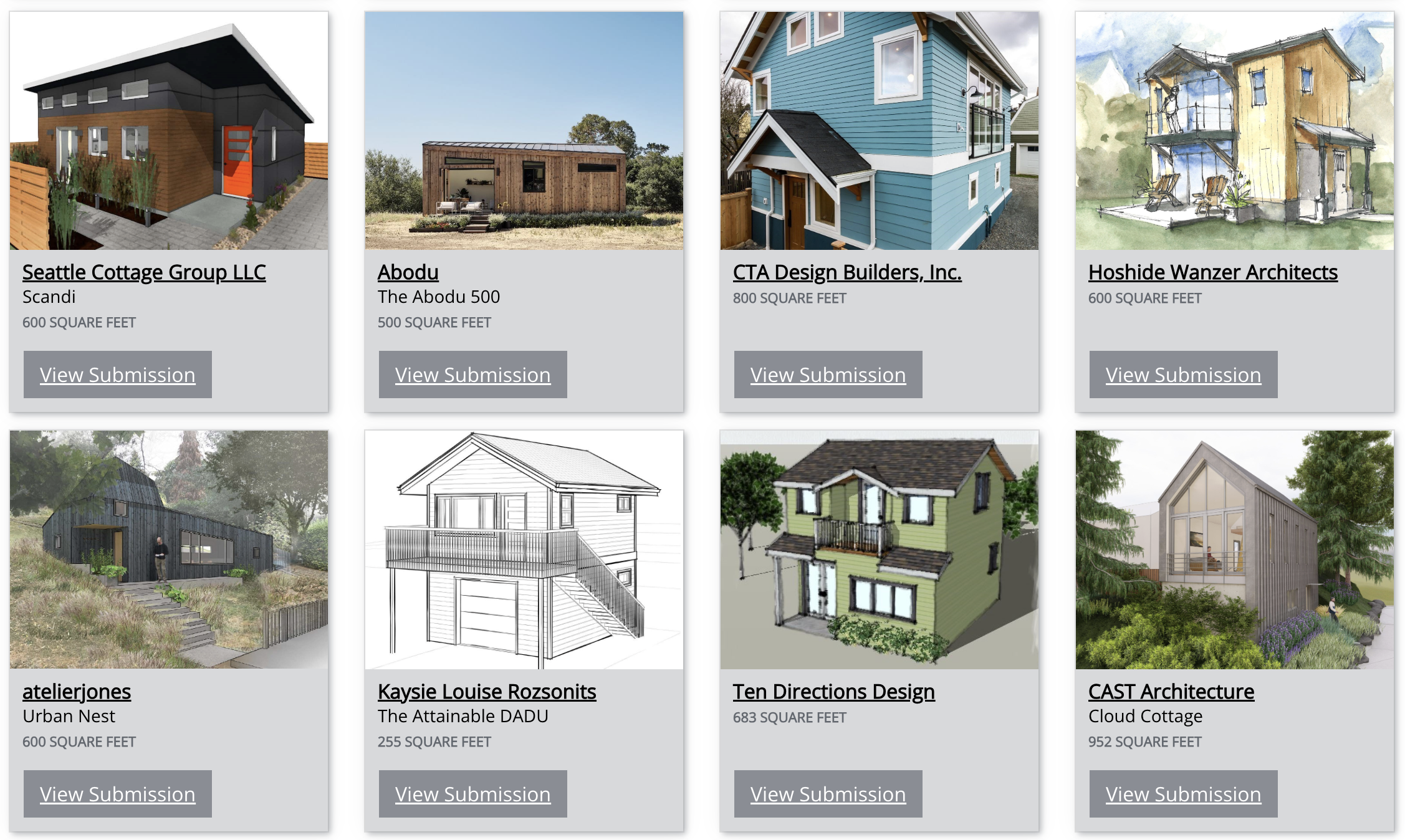
Pre-approved backyard cottage designs from Seattle's ADUniverse program, ranging from 255 to 952 square feet. Some can be permitted in as little as two weeks.
How big is the lot, really? A larger lot gives you more options. But “larger” doesn’t have to mean enormous—Seattle’s minimum lot size for an ADU is just 3,200 square feet. Lot shape, setbacks, and usable space matter as much as raw square footage.
Is there alley access? This is a big one. If your property backs up to an alley, you may be able to build a detached unit with zero rear setback—which opens up significantly more of your lot. It also makes construction easier and gives the new unit its own entrance, which is huge for rental appeal or family privacy.
How much space can you actually build? A lot of people still think backyard cottages are limited to tiny 400- or 600-square-foot studios. That’s outdated. Under current rules, ADUs can be up to 1,000 square feet—that’s a legitimate two-bedroom home. Some configurations allow even more depending on your lot’s floor area ratio.
What’s the zoning, and has it been updated? Not every city has implemented the new state rules on the same timeline. Knowing whether your city has adopted the latest changes—and what those changes mean for your specific lot—is the difference between guessing and planning.
Do the numbers work? Building an ADU is an investment. The cost, the rental income potential, the impact on your property value—these are all calculable. But they’re different for every lot, and getting them right matters.
These aren’t questions you need to answer alone. This is exactly the kind of conversation I have with homeowners and buyers every week—looking at a property not just for what it is today, but for what it could become. If you’re even a little curious, that’s enough to start.
Building a detached ADU in Seattle today typically runs between $275,000 and $450,000 depending on size and finishes. Permitting alone can take several months. This isn’t a weekend project—it’s a strategic decision. And sometimes the smartest move isn’t building at all. Sometimes it’s selling to someone who will.
Coming Home to an Old Idea
We’re not inventing something new here. We’re remembering something old—the courtyard, the compound, the village within the village. The single-family-home-on-a-single-lot was a seventy-year experiment. It gave us many good things. But it also made us lonelier, more financially fragile, and further from the people we love.
What’s happening now—in Seattle, across Washington, and in cities around the country—is a quiet correction. A return to a shape of living that humans have always known works.
If you own property and you’re curious about what it could become—or what it might be worth to someone who sees its full potential—I’d love to have that conversation. It’s one of my favorite things to talk about.